Drought hits 156 703 km2 of EU land in 2024
The sustainable development goal ‘life on land’ (SDG 15) aims to protect, restore and promote sustainable use of terrestrial ecosystems, sustainably manage forests, combat desertification, and halt and reverse land degradation and halt biodiversity loss.
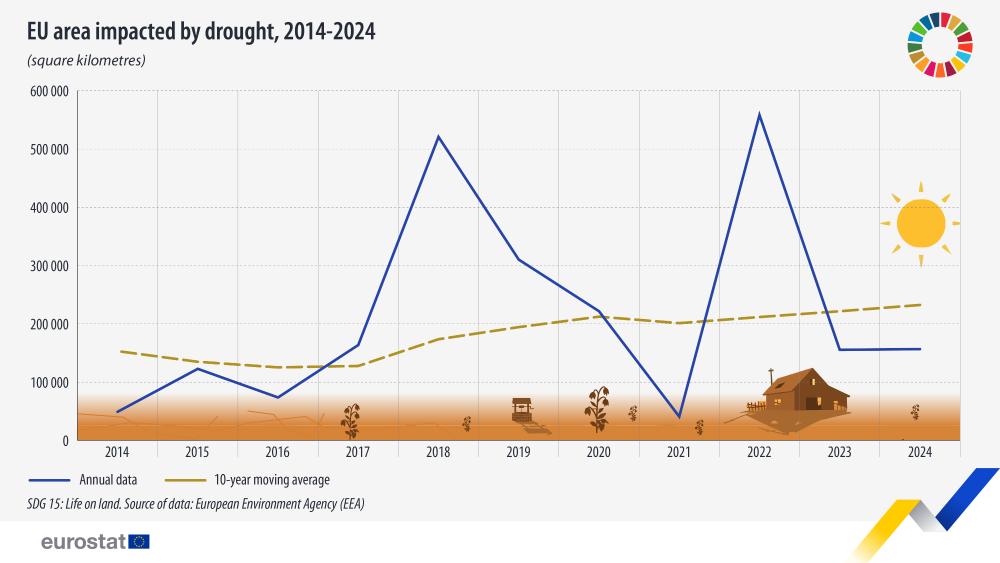
Eurostat regularly assesses the progress of the EU towards the SDGs. One of the EU indicators used to measure progress in SDG 15 is the extent of the EU area impacted by drought. This indicator monitors areas where soil moisture deficits occur during the growing season, causing reduced vegetation productivity.
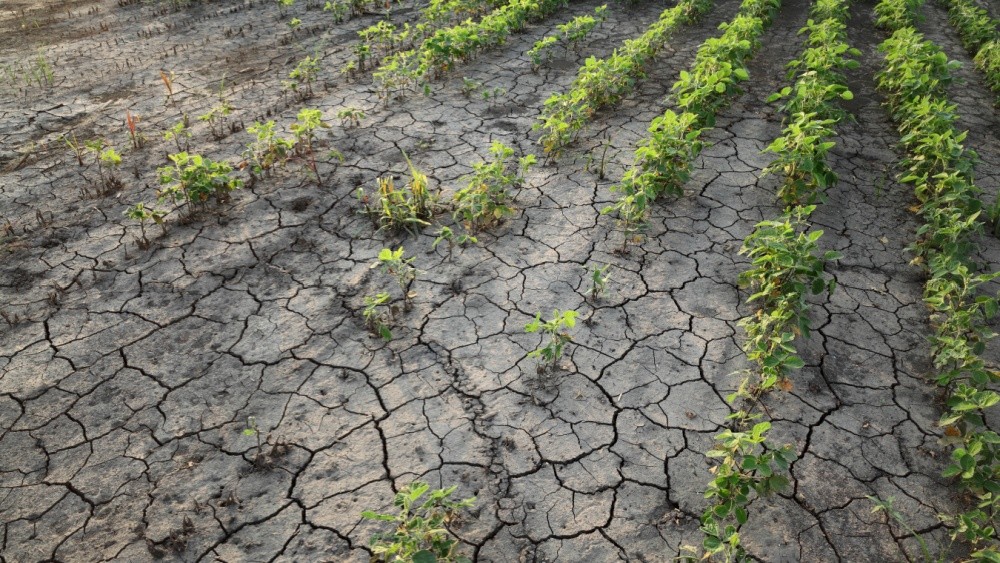
In 2024, 156 703 square kilometres (km2) of EU land were affected by drought. Between 2014 to 2024, there were notable spikes in drought-affected areas, particularly in 2018 (520 817 km2) and 2022 (558 313 km2). Despite the lower values in in 2023 and 2024, the 10-year moving average shows that, overall, the affected area has been increasing over time.
Source dataset: sdg_15_42
Another indicator for monitoring SDG 15 is the extent of forest areas.
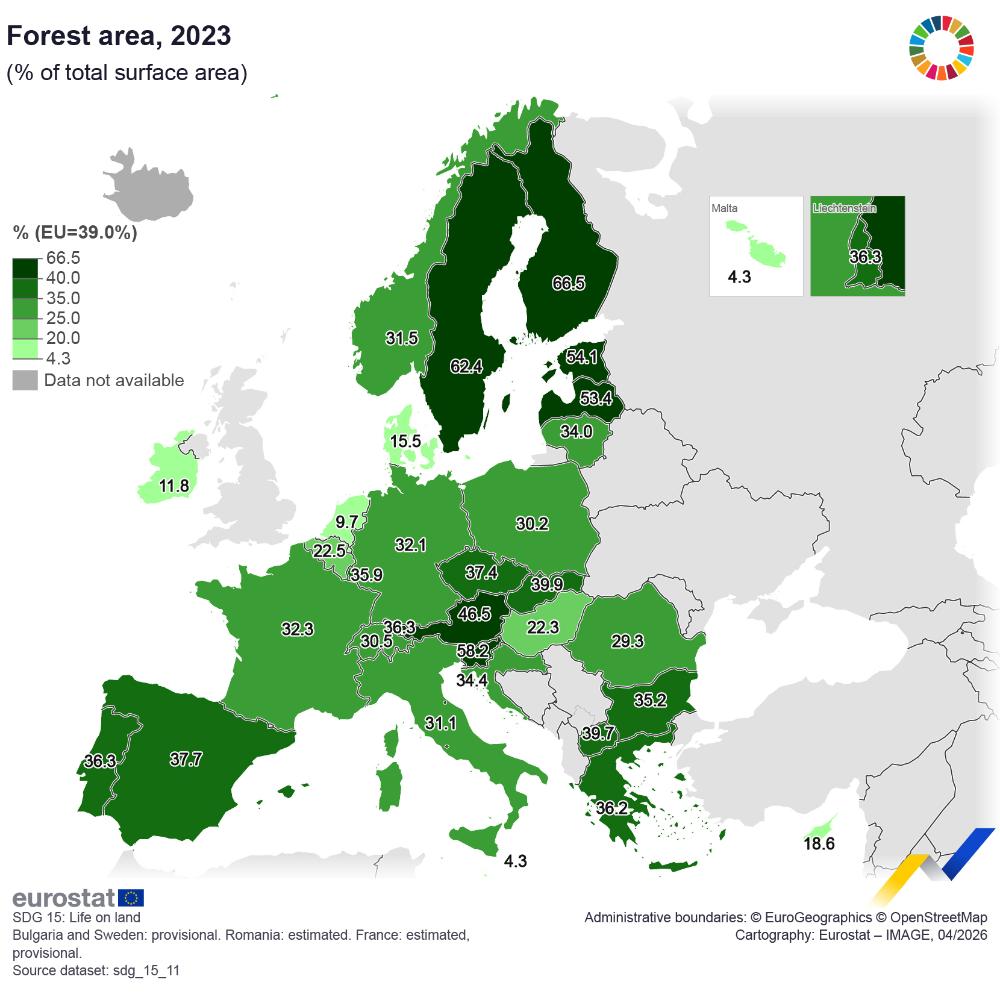
In 2023, 39.0% of the EU’s land area was covered by forests. In 5 EU countries, forests spread over more than half of the area: Finland (66.5%), Sweden (62.4%), Slovenia (58.2%), Estonia (54.1%) and Latvia (53.4%).
Malta had the lowest share of forest-covered area (4.3%), followed by the Netherlands (9.7%) and Ireland (11.8%).
Source dataset: sdg_15_11
This article marks the International Mother Earth Day, celebrated annually on 22 April.
For more information
- Publications on the sustainable development goals
- Thematic section on the sustainable development goals
- Database on sustainable development goals
- Recording of the webinar on the EU’s progress towards the SDGs
- Visualisation tool SDG EU progress tracker
- Visualisation tool SDGs & me
- Visualisation tool SDG country overview
- UN’s 2030 Agenda for Sustainable Development
Methodological note
‘Drought’ covers only meteorological droughts with soil moisture deficits causing reduced vegetation productivity due to insufficient precipitation, as opposed to hydrological droughts, which occur when low water supplies become apparent in streams, reservoirs and groundwater levels, usually after many months of meteorological drought.
For information on upcoming releases visit our release calendar. If you have any queries, please visit our contact us page.